Showing posts with label biometrics. Show all posts

Thursday, June 15, 2017

Biometrics Update: More Biometrics Technology at the Airport

Biometrics may replace your passport and boarding passBiometrics enthusiasts tell us about a world where travelers no longer need to use physical documents like passports, credit cards, and boarding passes. Instead, biometrics devices would be able to scan your face, eyes, or fingerprints and quickly clear you to go straight to your flight. Does that sounds like science fiction? It's science reality! Biometrics technology exists, and more and more airports and airlines are incorporating it into security and boarding procedures.

Read on for the latest news about biometrics technology at the airport!

JetBlue Testing Facial Recognition at Boarding

JetBlue has just become the first US airline to test biometrics technology at boarding gates. Starting on June 12, they have been running a test at Boston's Logan Airport. On some flights from Boston to Aruba, they are allowing travelers to use biometrics instead of presenting their passport and boarding pass at the gate.

The biometrics used by JetBlue rely on facial recognition. Passengers who agree to try the program will have their photo taken before they board their flight. Their facial features will be checked against data provided by US Customs and Border Patrol. It takes just 5 to 7 seconds for the facial recognition data to be analyzed. When it shows that the face is a match for the passport and airline ticket data in the system, the passenger is allowed to board.

JetBlue's testing in Boston will run for 45 to 60 days this summer. If the program is successful, the airline will look to expand it to more flights and more airports.

Delta Airlines has also announced that they will test biometrics boarding. They will run a test in Washington, DC, using fingerprint-based biometrics. Their test will be limited only to members of their SkyMiles loyalty program who are also enrolled in the CLEAR system.

Dubai Airport Aims to Go Passport-Free with Biometrics Technology

Dubai is well known for having one of the world's most beautiful airports. Dubai International Airport is also the world's busiest airport for international arrivals and departures. To keep travel moving smoothly, the government of Dubai is investing heavily in biometrics technology.
Dubai Airport is beautiful and high-tech

Dubai's government has signed a major agreement with the UK-based technology company ObjectTech. The company has been tasked with creating a system to eliminate the use of passport books at Dubai International Airport. It's part of Dubai's “10x Policy,” which embraces digital technology in an effort to keep the nation 10 years ahead of the rest of the world.

When the new technology is fully developed and rolled out, passengers arriving at Dubai International Airport should be able to get off their flights and go directly to baggage claim, without stopping to have their passports reviewed.  Instead, passengers will all be pre-approved for entry using an electronic system. We imagine this pre-approval system will be similar to an eVisa process, applied for online. Biometric scanning will allow passengers to be verified quickly, either at boarding or on arrival.

TSA Trials Fingerprint Screening at Two Airports

This week, the Transportation Security Administration has begun testing fingerprint screening at two US airports. Passengers at Denver International Airport and Atlanta Hartsfield-Jackson International Airport can try the biometric fingerprint screening at the PreCheck security lanes.

The fingerprint screening will occur at the point in the security process when you'd normally pull out your passport and boarding pass. Actually, during the trial, you still do need to show your passport and boarding pass, in addition to having your fingerprints checked! By using the physical documents as a backup, the TSA will be able to test how reliably the biometrics technology is working.

Trials may be extended to other airports. The ultimate goal would be to revamp the initial screening by a TSA security officer. Instead of having passports and tickets manually reviewed, passengers would be able to touch their fingers to a pad and quickly be green-lighted through to the next stage of security.

Have you experienced any of these or other biometrics technology at the airport? Tell us in the comments!

Wednesday, March 15, 2017

Iris Scans: Could Your Eyes Become Your Passport?


Could an iris scan become your passport?
It might seem like something out of a James Bond movie, but iris scan technology is real, and may already be in use at your local airport! One company that manufactures eye-scanning technology envisions a future in which your eyes could be your passport. They could be your boarding pass and your credit card, too!
Imagine going to the airport and not having to pull out your wallet once. Instead of having your passport inspected at airport security, you’d be able to pass by an iris scan kiosk that would identify you within 2 seconds and verify that you are an approved traveler booked on an upcoming flight. You could breeze through security, leaving you plenty of time to visit the coffee bar in the terminal. There, you could look into another eye scanner – this one connected to credit card systems – to pay for your latte and scone.

Iris Scans and Biometrics

Iris scans are a form of biometrics – technology that identifies you based on your physical traits. Your passport already has biometric technology features. When you apply for a new passport, your passport photo is scanned and saved onto a tiny chip embedded in your passport. That scanned photo can be used for facial recognition purposes.

If you’ve ever read detective novels, you’re already familiar with one form of biometrics: fingerprints. Everyone has a unique set of fingerprints. Once your fingerprints are on file, they can be used to positively identify you.

The only problem with fingerprints and facial recognition for biometrics is that they can change over time. Just the forces of aging will change the contours of your face – sorry, but it’s true! Your face may change even more dramatically if you lose or gain weight, have an accident, or get plastic surgery. Your fingerprints also may change over the years. The pads of your fingers will wear and smooth as you age. Your fingerprints could also be damaged by scars or burns.

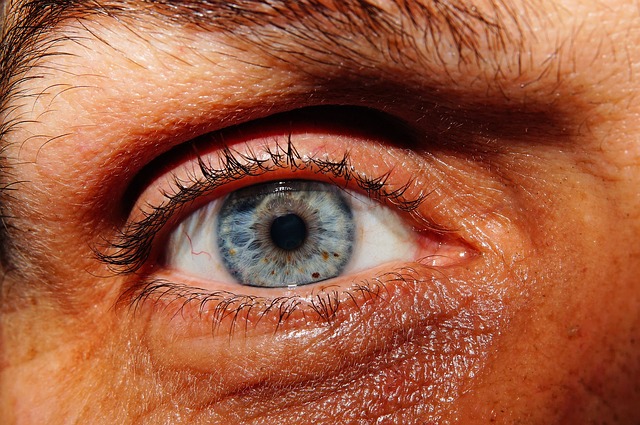
Your eyes, on the other hand, don’t change as you age. You might think of your eyes as just being blue or brown, but take a close look in the mirror. Your irises aren’t one solid color. You may see rings, rays, flecks, and freckles inside your iris. The pattern of your iris is just as unique as your fingerprints. No one else has eyes just like you. Even identical twins have their own distinctive iris pattern.

Your eyes are unique

How Does an Iris Scan Work?

If an iris scan sounds painful and intrusive, don’t worry. The basic part of an iris scanner is just a digital camera. To use an iris scanner, you simply look in to it, and the camera inside will capture images of your iris in both normal and near-infrared light. The infrared images help show the iris patterns in people with very dark eyes. The computer inside the iris scanner then analyzes the image and looks for a match in the database. Iris scanners created by Tascent, one of the companies building scanners for airports, can identify travelers with 99% accuracy in only two seconds.

In order for the iris scanner to recognize you, though, you’ve got to already be in the database. The process of having your iris scan added to the database is known as “enrollment.” Enrollment only takes a few minutes. You’d have your eyes scanned, and then your name and other details are entered in to the database along with the image of your irises.

Iris Scan Technology at the Airport

Although we might not yet be at the “airport of the future” stage with iris scanners everywhere, you may have already seen the technology at work. Iris scanners from Tascent are already in use for some screening purposes at airports in London and Dubai.

In the United States, iris scans are used in the CLEAR lanes now available at airport security at 22 major airports. People who are enrolled in CLEAR are able to use an automated kiosk to confirm their identity via iris scan or fingerprints. Once cleared by the kiosk, travelers can bypass the long line to have their ID checked by TSA security officers. They can go directly to the physical screening area, where their bags are screened as normal, and the traveler goes through the metal detector or millimeter-wave screening machine. CLEAR enrollment is separate from TSA Precheck or other Trusted Traveler programs, but works well as a complement to them.

Will Your Eyes Become Your Passport?

Your eyes contain identifying data
Don’t throw away your passport book quite yet! Although the technology exists, we’re a long way off from being able to phase out physical passport books. In order for iris scans to completely replace passports, every border crossing in the world would need to have the ability to scan traveler’s eyes. It’s one thing for airports in wealthy countries to install expensive machinery, but what about tiny dirt-runway airports in developing nations? Every airport, seaport, river crossing, or land border checkpoint on earth would need to have iris scanning technology available. Will your eyes become your passport? We’ll never say never… but we’ll say not yet, and not anytime soon.